
Unlimited Prepaid eSIM Plans Without the Hidden Fees
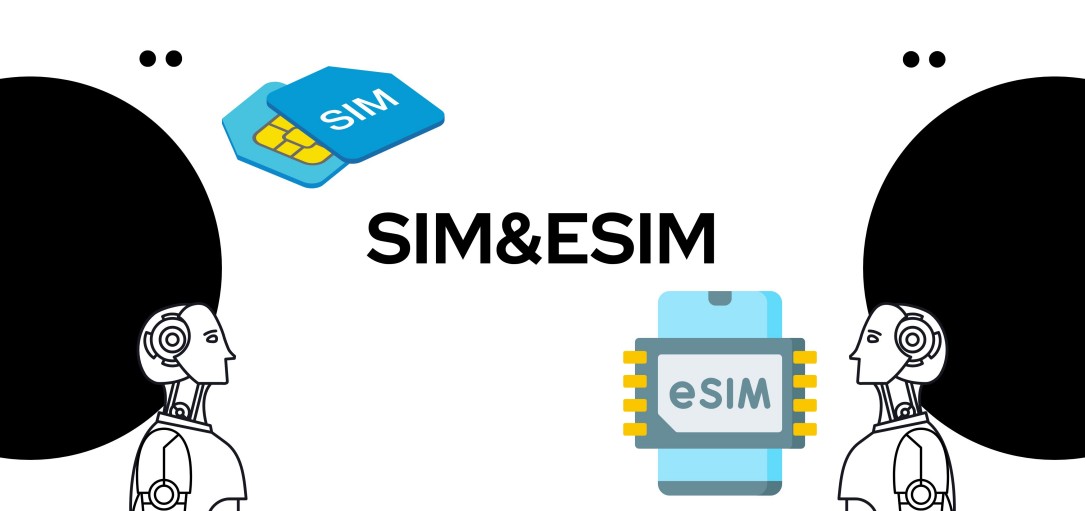
Did you know that prepaid eSIMs let you activate a mobile plan without ever needing a physical plastic card? Instead, you simply download a digital profile to your phone, which can be done from home before you even board a flight. This means you can instantly connect to a local network upon arrival, avoiding expensive roaming fees while enjoying flexible, hassle-free control over your data and costs.
Why Travelers Are Switching to Digital Roaming
Travelers are switching to prepaid eSIM for digital roaming because it eliminates physical SIM hunting at airports. You activate coverage instantly before departure, avoiding local vendor queues and price gouging. The key advantage is instant, multi-network access without removing your primary SIM, keeping your home number active for banking and two-factor authentication.
You manage data plans directly from a provider’s app, topping up or switching carriers mid-trip without visiting a store.
This control ensures you never overpay for hotel Wi-Fi or suffer spotty single-network coverage, as prepaid eSIMs dynamically connect to the strongest local tower.
Comparing Virtual SIM Cards to Physical Plastic Ones
Virtual SIM cards eliminate the need to handle tiny plastic trays that can easily be lost or damaged when swapping networks abroad. Prepaid eSIM activation allows travelers to purchase and install a local data plan before departure, avoiding the hunt for a physical store upon arrival. In contrast, physical SIMs require ejecting the current card, carefully storing the original, and reinserting it post-trip. This digital shift means users can switch between multiple roaming profiles without carrying a separate slot for each destination. For frequent travelers, a single virtual SIM also removes the risk of bending or scratching a plastic chip during transit.
- Select and purchase a prepaid eSIM plan online for target country
- Scan a QR code to install the profile directly into the device’s SIM manager
- Activate the data plan at the destination, keeping the physical card undisturbed
Who Benefits Most from Instant Connectivity Abroad
The users who benefit most from instant connectivity abroad are frequent business travelers who cannot afford a connectivity gap. For them, a prepaid eSIM eliminates the scramble for local SIM cards or the risk of hotel Wi-Fi failing before a critical video call. Digital nomads also win, as they can land in a new country and immediately access maps, coworking spaces, and client messages without hunting for a physical store. Similarly, trip leaders and solo adventurers rely on this instant activation to coordinate meetups or navigate unfamiliar streets from the moment they step off the plane, bypassing the usual hour of disconnection.
How to Choose the Right Pay-As-You-Go Data Plan
When you land in a new city, your prepaid eSIM becomes your digital lifeline. To choose the right pay-as-you-go plan, first estimate your daily usage—a traveler wandering, uploading photos, and using maps needs a different package than someone mostly connected to hotel Wi-Fi. I once bought a “unlimited” plan only to find it throttled after 1GB. Instead, compare data rollover policies; some providers let unused gigabytes carry over for a week, which saves you from buying a fresh top-up mid-trip. Always check if the plan supports tethering for your laptop, especially if you’re a digital nomad relying on one connection for work. Finally, scan the speed tiers—some budget plans cap at 3G, which makes video calls a struggle. A few extra dollars for LTE or 5G access on your prepaid eSIM turns a frustrating commute into a seamless streaming experience.
Data Caps, Speed Tiers, and Fair Usage Policies Explained
When evaluating prepaid eSIM plans, understand that data caps, speed tiers, and fair usage policies directly dictate your real-world experience. A data cap is a hard limit; exceeding it typically stops data access unless you top up. Speed tiers define a plan’s maximum throttle, such as “4G” or “5G,” but fair usage policies often impose a deprioritization threshold, slowing your connection after a set amount of high-speed data is consumed, even if your cap remains. Always check a plan’s “after-cap” policy—some cut to unusable 128 kbps, while others offer an immediate throttle.
- Verify the exact data cap in gigabytes; “unlimited” plans have a hidden threshold before throttling begins.
- Confirm the post-cap speed tier: 128 kbps vs. 1 Mbps significantly changes usability for messaging or maps.
- Scrutinize the fair usage clause for specific per-day or per-week sub-caps that trigger slowdowns.
Regional vs. Global Coverage: Matching Zones to Itineraries
When choosing a prepaid eSIM, match coverage zones directly to your specific stops. A regional prepaid eSIM saves money if your itinerary sticks to one continent, like Europe or Asia. But for a trip hopping from Japan to Australia to the US, a global plan eliminates the hassle of juggling multiple eSIMs. Check your exact countries against the plan’s list—regional doesn’t always include every nation.
If I’m visiting two neighboring countries, is a regional plan always enough? Usually yes, as long as both are in that region’s coverage map. Always verify specific countries, not just the region name, to avoid a surprise re-purchase mid-trip.
Activation and Setup Without the Headache
The primary relief of a prepaid eSIM lies in its activation process, which eliminates the physical SIM swap entirely. Instead of waiting for a card to arrive or visiting a store, you purchase a data plan online and receive a QR code or download link instantly via email. No headache arises from fumbling with a SIM tray or losing a tiny chip. The entire setup is completed by scanning the QR code with your device’s camera within the cellular settings menu. This digital provisioning takes under two minutes, and the profile activates as soon as you connect to a network. For frequent travelers, this means arriving at a destination with data already live, bypassing the hunt for a local store or a temperamental vending machine.
Scanning a QR Code: The Five-Minute Installation Process
Scanning a QR code initiates the prepaid eSIM five-minute installation by immediately linking your device to the carrier’s provisioning server. After purchasing, open your phone’s settings, tap “Add Cellular Plan,” and scan the provided QR code. Your device will download and install the eSIM profile automatically, requiring no manual data entry. To finalize, follow this sequence:
- Confirm the plan details displayed on-screen.
- Assign the prepaid eSIM as either primary or secondary line.
- Restart the device to activate network registration.
The entire process completes within five minutes, leaving you connected without physical swaps.
Dual SIM Configurations: Keeping Your Home Number Active
When setting up a prepaid eSIM, a dual SIM configuration lets you keep your home number active without swapping physical cards. Simply install your new eSIM alongside your existing physical SIM. Then, assign your home SIM for voice calls and SMS, while the eSIM handles mobile data for local browsing. To avoid roaming charges, follow this sequence:
- Insert your physical home SIM into the primary slot.
- Download and activate the prepaid eSIM for data.
- In settings, set the home SIM for calls and texts, and the eSIM as your default data line.
This way, your home number remains reachable, while you seamlessly use the eSIM’s local data plan.
Unlocking Hidden Cost Savings
Unlocking hidden cost savings with a prepaid eSIM starts by ditching expensive roaming add-ons from your home carrier. Instead of paying per-day fees, you buy local or regional data bundles directly, often slashing your bill by up to 90%. This model lets you switch between providers instantly to chase the best rates, avoiding long-term contracts that lock you into inflated prices. You also eliminate physical SIM shipping fees and the risk of lost cards, which adds quiet savings over multiple trips. Even unused data balances roll over on some providers, turning what would be waste into future value. Ultimately, the control to top up only what you need—rather than paying for unlimited plans you rarely max out—is the core financial advantage.
Why Carrier Retail Plans Often Cost More Than Digital-Only Options
Carrier retail plans for prepaid eSIM inflate costs largely due to physical infrastructure and overhead. You pay for storefronts, printed packaging, and staff commissions—expenses absent from digital-only providers. These legacy costs are baked into the price, making a retail prepaid eSIM plan $10–$30 more per month for identical data allowances. The markup often funds convenience rather than better service quality. Conversely, digital-only operators bypass distribution chains entirely, passing savings directly to you. Direct-to-consumer pricing eliminates middleman markups, a key factor in unlocking hidden cost savings through prepaid eSIM.
| Plan Aspect | Carrier Retail | Digital-Only |
| Monthly cost (5GB) | $30–$45 | $15–$20 |
| Overhead driver | Physical stores & staff | None (automated delivery) |
| Activation fee | Often $5–$10 | Usually $0 |

Avoiding Unexpected Charges with Zero-Contract Billing
Zero-contract billing on a prepaid eSIM means you only pay for data you specifically purchase upfront. This completely eliminates surprise overage fees or hidden roaming taxes that often appear on post-paid bills. With no auto-renewal or subscription trap, your wallet stays safe from charges you didn’t manually approve. It’s the ultimate hack for unexpected charge prevention, giving you total control over every top-up.
Zero-contract prepaid eSIMs prevent unexpected charges by requiring manual payment before use, so you never owe a cent you didn’t agree to.
Best Practices for First-Time Digital Roamers
The first time I swapped my physical SIM for a prepaid eSIM, I felt a flicker of panic—no local store to fix a screw-up. I learned fast: install the eSIM profile *before* leaving home, while Wi-Fi is stable. This prevents landing abroad with no data and a glitchy QR code scan. My real lesson came in a Tokyo subway: I had activated the eSIM too early, burning a day of validity underground. Always activate only after touchdown, not at the departure gate. A quick trick: set a phone reminder labeled “Switch to eSIM data” when you board. What if the eSIM doesn’t activate right away? Reboot your phone and toggle airplane mode—this forces a fresh network handshake with the local carrier, fixing 90% of setup stalls.
Checking Device Compatibility Before You Depart
Before purchasing a prepaid eSIM, verify your handset supports eSIM technology; most modern phones from 2019 onward do, but older models or carrier-locked devices may not. Check your phone’s IMEI in the settings or dial *#06# to confirm eSIM capability. Sideloading a profile onto an incompatible device will fail, so run a device compatibility check via your chosen eSIM provider’s website or app. This step prevents costly data downtime upon arrival.
- Confirm your phone is unlocked and not restricted by your home carrier.
- Ensure your device’s operating system version supports eSIM profiles (iOS 12.1+, Android 10+).
- Verify your specific model variant, as regional versions may lack eSIM hardware.
Testing Connection Speeds Upon Arrival

Immediately after installing your prepaid eSIM, run a speed test upon arrival before leaving airport WiFi. This confirms the local network’s performance for your critical first tasks. Use a reliable app like Speedtest by Ookla. If the download speed feels sluggish for basic navigation, activate a fallback eSIM profile or Singapore eSIM switch your phone’s APN settings to the carrier’s recommended values. To verify stability, follow this sequence:
- Open a simple webpage to check HTTP loading.
- Stream a short video to test buffering.
- Send a voice message via a messenger app to measure latency.
Only proceed to your next destination once all three pass comfortably. This rapid validation ensures your eSIM truly supports your roaming needs.
Real-World Performance Across Different Regions
Real-world performance of a prepaid eSIM across different regions varies significantly due to local network infrastructure. In urban areas of Western Europe and North America, speeds are consistently high, often exceeding 100 Mbps on 5G networks. Conversely, in parts of Southeast Asia or South America, connectivity can drop to 3G or 4G with fluctuating latency, especially outside city centers. In remote regions like rural Africa or the Australian outback, coverage may be limited to 2G or no signal at all, even with a premium prepaid eSIM. Switching between local partner networks manually can sometimes improve speeds by connecting to a stronger tower, but this function is not available on all eSIM apps. Always check coverage maps specific to the provider, as a prepaid eSIM from a global aggregator may route traffic through distant servers, increasing latency in regions like Oceania or the Middle East.
European Networks: Seamless Across Borders
A prepaid eSIM configured for European networks delivers seamless cross-border connectivity by automatically switching between local carriers as you travel across Schengen countries, eliminating the need to swap physical SIMs or reconfigure settings. This means your data session remains active while moving from France to Germany to Italy, with no manual network selection required. The eSIM profile locks onto the strongest available partner network at each location, maintaining consistent speeds for navigation, messaging, and streaming without interruption.
- Automatic handover between national carriers prevents signal drops at border crossings.
- Single eSIM profile covers multiple countries, removing separate local SIM purchases.
- Data remains usable across different networks without roaming surcharges within the region.
Coverage Gaps in Remote or Less Connected Areas
In remote or less connected areas, prepaid eSIMs expose critical coverage gaps due to their reliance on single-network agreements. Unlike local physical SIMs that can roam onto weaker regional towers, many prepaid eSIMs lack fallback LTE bands for mountainous or desert zones. A user in a rural valley might have zero signal if the host carrier lacks infrastructure there, while a competing eSIM tied to a different operator shows edge connectivity. The table below compares typical connectivity outcomes:
| eSIM Carrier A | Network Partner | Result in Remote Zone |
| Global Plan | Partner A | Dropped calls, no data |
| Regional Plan | Partner B | Patchy 3G, SMS only |
Practical steps include checking coverage maps for the specific partner, not just the eSIM brand, and pre-loading offline maps, as gaps often occur within 10 km of a known cell tower.
Plan Features That Make a Difference
When choosing a prepaid eSIM, the plan’s data-first flexibility and multi-country portability are what truly set it apart. Look for plans offering rolling validity so unused days don’t vanish, and dynamic top-ups that let you extend only data when needed—not the whole plan. A critical difference is eSIM profile swapping, which lets you keep multiple prepaid plans on one device and switch between them without removing a physical SIM.
Top-tier plans also include local number add-ons within the same prepaid eSIM, allowing you to receive calls for verification without sacrificing your main data allowance.
Prioritize plans with pause-and-resume features for travel lulls, ensuring your data and expiry only tick while you’re actively using it.
Hotspot Tethering Limits and Multi-Device Usage
For heavy multi-device usage, prepaid eSIM plans impose strict hotspot tethering limits that cap speeds or data after a threshold. While a 10GB plan might offer unlimited tethering, many carriers throttle tethered connections to 2G or 3G speeds once you hit 1-3GB. Always check the fine print: some plans restrict tethering to one device at a time. Q: Can I tether to a laptop and tablet simultaneously? A: Yes, if your plan specifies multi-device support, but shared data pools drain faster. Prioritize plans advertising “unlimited tethering” with a stated speed floor to avoid unusable connections for work or streaming.
Top-Up Flexibility When Your Initial Balance Runs Low
When your initial balance runs low, you need a plan that lets you add data instantly without hunting for a physical store. The best prepaid eSIMs let you top up from your phone in seconds, often with just a tap. This means you can extend your coverage mid-trip if you’re navigating an unfamiliar city or waiting for a layover. Some providers even let you choose a tiny data pack for a few hours, so you’re not forced to overbuy. It’s all about keeping you connected on your own terms, exactly when the meter’s ticking down.
Security and Privacy with Temporary Numbers
A prepaid eSIM with a temporary number offers a potent security layer by severing the link between your primary identity and the service you are testing. This disposable identity prevents data brokers from associating your main number with temporary online activities, drastically reducing spam and targeted phishing attempts. No permanent record ties back to your personal accounts or physical location. How does a temporary number protect me from data breaches? Since the number is short-lived, any leaked credentials or SMS intercepts become useless the moment the eSIM expires, providing a narrow window of vulnerability that closes automatically. This makes it an ideal tool for verifying services or conducting transactions without committing your long-term digital footprint.
Data Encryption Standards Offered by Leading Providers
Leading providers protect your temporary number with bank-grade AES-256 encryption, the same standard used by financial institutions. This scrambles every data packet traveling from your prepaid eSIM to their servers. For example, Airalo applies end-to-end encryption on all SMS and call metadata, not just the content. Holafly uses TLS 1.3 to secure the initial activation handshake. The encryption keys are rotated every session, preventing reuse even if a previous key is compromised. A clear sequence is:
- Provider generates a unique encryption key for your temporary number.
- All inbound and outbound data is encrypted with that key before leaving your device.
- Upon deactivation, the key is permanently destroyed, rendering the number unreadable.
Managing Personal Information on Short-Term Lines
When using a prepaid eSIM on a short-term line, you’re in control of what personal info you share. Since these numbers are temporary, avoid linking them to your primary accounts like banking or social media. Use the line only for sign-ups or verifications where privacy matters, then let it expire. This way, your real data stays yours. Stick to keeping your data separate from long-term services, and delete any stored details before the eSIM deactivates. It’s a simple, low-effort way to stay secure without overthinking it.
Common Misconceptions About Digital Mobile Services
A traveler once assumed a prepaid eSIM would automatically replace their home carrier, only to discover it acts as a secondary line unless they manually disable the primary SIM. Another common myth is that activation is instant; in reality, it often requires a stable Wi-Fi connection during setup, and a QR code from the provider must be scanned before departure. Many also believe you can’t keep your original number, but prepaid eSIMs simply add data to your device while your existing number stays untouched on the physical SIM. The biggest misconception is that prepaid eSIMs are complicated, yet they operate like any other data plan—just without the plastic card.
Most confusion stems from assuming eSIMs replace everything, when they are actually a complementary tool for flexible connectivity.
Does a Virtual Card Drain Your Battery Faster?
A virtual card, like a prepaid eSIM, does not inherently drain your battery faster than a physical SIM. The battery impact comes from network scanning for weak signals, not the card type itself. If you’re in an area with poor coverage, your device works harder to maintain a connection, which affects battery life. An eSIM uses the same modem hardware as a physical SIM, so there’s no additional power draw from the software profile alone. You’ll see similar battery performance whether you use a physical or virtual card.
A virtual card does not drain your battery faster; the real culprit is the phone’s struggle to connect in low-signal areas, regardless of SIM type.
Myth Busting: Reliability Compared to Traditional Carriers
A persistent myth is that prepaid eSIMs inherently lack the network reliability of traditional carriers. In reality, prepaid eSIM reliability often matches or exceeds postpaid service because the leading providers lease access to the same physical towers as major carriers. Coverage and stability depend entirely on the local host network, not the eSIM provider itself. A prepaid eSIM from a reputable reseller using a premium network performs identically to a traditional carrier’s own signal for voice and data.
- Prepaid eSIMs rely on the same infrastructure as traditional carriers, so signal strength is equivalent.
- Service interruptions are caused by the host network, not the eSIM technology or prepaid model.
- Data speeds are identical when both services use the same tier of network access (e.g., 5G NSA).
What the Future Holds for Instant Mobile Services
The future of instant mobile services hinges on prepaid eSIM transforming connectivity into an on-demand utility. Expect seamless, AI-driven activation where a traveler’s device auto-detects local network needs and purchases a prepaid eSIM profile in seconds, without opening an app. This evolves into a “digital wallet for data,” where you stack multiple short-term plans and switch between them with a single tap, prioritizing coverage or price in real-time.
The core shift is from buying a plan to borrowing a network: instant mobile becomes a background service, not a chore.
Ultimately, prepaid eSIM will merge with device intelligence to preemptively top up, pause unused data, or reallocate it across devices, making mobile service as fluid as streaming content.
Rise of eSIM-Only Traveler Ecosystems
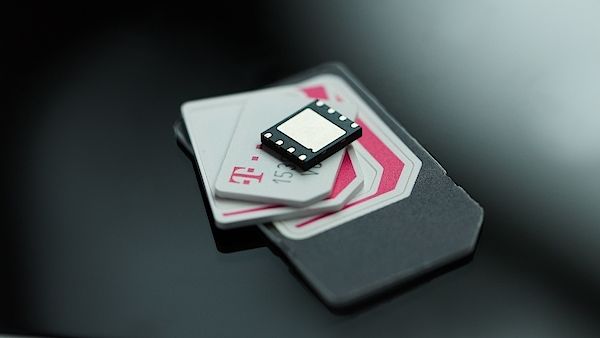
The rise of eSIM-only traveler ecosystems transforms how you prepare for trips, focusing entirely on app-based management. These systems bundle prepaid eSIM data with integrated tools—like local guides, currency converters, and real-time translation—directly within a single platform. You activate coverage instantly upon landing, then use the same app to top up or switch between country-specific plans without swapping physical cards. This integrated app environment streamlines every step, from itinerary sync to emergency connectivity. Plug-and-play connectivity becomes the norm, eliminating pre-trip logistics. Q: Does this ecosystem lock me into one provider? No—most apps let you compare and purchase prepaid eSIMs from multiple regional carriers, retaining choice within the streamlined interface.
Integration with Smart Luggage and Wearables
Prepaid eSIM will transform travel by embedding connectivity directly into smart luggage and wearables. A suitcase with a built-in eSIM can automatically report its location and unlock for authorized users, eliminating lost-bag anxiety. A smartwatch with its own prepaid eSIM profile allows you to take calls, navigate, or stream music without carrying a phone, while sharing the same data pool as your main device. This ensures your luggage can trigger theft alerts even if your phone is dead, and your watch maintains seamless uninterrupted travel connectivity during long transfers.
| Wearable Use Case | Smart Luggage Use Case |
|---|---|
| GPS navigation, calls, and payments without a phone | Real-time location tracking and remote lock/unlock |
| Shared data pool with the same prepaid eSIM plan | Automatic alerts for battery or tampering events |
Understanding How a Prepaid eSIM Works Without a Physical Card